

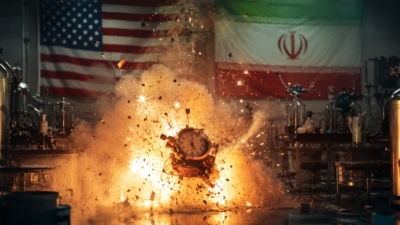
A shocking deadlock has emerged at the Middle East diplomatic table, with Iran resoundingly denying the American leak to Axios regarding a final agreement with the US on a "60-day Memorandum", which would bring a ceasefire on all fronts and, consequently, the opening of the Straits of Hormuz. In fact, the Supreme Leader of the Islamic Republic, Mojtaba Khamenei, has not yet signed any draft with the United States, as reported by the Israeli outlet i24. At the same time, a source close to Iran's negotiating team stated that, contrary to the claims of Western sources, the text of the potential Memorandum of Understanding has not been finalized so far. According to the Tasnim agency, the source stated that "contrary to the claim of some Western sources that the so-called 'Memorandum of Understanding' between Iran and the 'terrorist regime' of the United States" has been finalized and only the announcement by the two sides remains, this is not the case and the text has not yet been finalized." The same source added that Iran has not yet informed the Pakistani mediator about the finalization of the text. At the same time, it highlighted that if the text is indeed finalized, Tehran will inform both the Pakistani mediator and the Iranian people accordingly. Until then, as the Tasnim agency characteristically pointed out, any narrative from Western sources regarding the finalization of the issue is not considered valid.
Iran denies: Fake news regarding the agreement with the US
More specifically, Iran denies a report by Axios, according to which an agreement or memorandum of understanding has been reached with the US. Sources from within the negotiations characterized the report as "fake news", stressing that Tehran is not going to sign any agreement that does not meet its interests. According to the same sources, Iran also rejects the proposed 60-day extension of the truce, citing continuous violations of the agreement. Tehran warns that it will respond to any new violation. At the same time, it is reported that Mojtaba Khamenei has not approved the proposed terms, a fact that shows that the negotiations remain uncertain and without final political approval from the Iranian leadership.

Iran's stance shows that Tehran does not desire a rushed or unbalanced agreement under pressure. Instead, it insists that any framework of agreement must secure its national interests and take into account the violations that have already occurred. Tehran's message to Washington is clear: no agreement can exist without respect for the Iranian positions and without real guarantees.
Supreme Security Council of Iran: "We cannot trust Trump, we want a ceasefire on all fronts"
Iran is hardening its negotiating line, making it clear that any temporary agreement cannot rely on empty American promises. Ali Bagheri Kani, deputy secretary of the Supreme National Security Council of Iran, sent a triple message to Washington: first, that "the US cannot be credible, as the violation of commitments is part of the nature of this country", second, that the illegally frozen Iranian assets must be released "without conditions and restrictions", and third, that the termination of the war on all fronts, including Lebanon, constitutes a fundamental principle of any negotiation or agreement. The intervention of Ali Bagheri Kani reflects the new confidence of Tehran.

Iran does not appear as a country begging for economic relief, but as a power demanding the return of what belongs to it. The release of Iranian funds is not a concession by the US, it is the restoration of an illegality. And the termination of the war on all fronts, from the Persian Gulf to Lebanon, is not Iranian blackmail, it is the minimum condition for a real de-escalation. Because Washington cannot demand an agreement with Tehran while simultaneously allowing the continuation of war fronts that directly pressure the Iranian security axis.
Thriller over the approval of the agreement by Mojtaba Khamenei
According to the Israeli journalist Amichai Stein of i24 News, a source familiar with the details revealed that the supreme leader of Iran, Mojtaba Khamenei, did not approve the agreement. This constitutes one of the reasons why the US President, Donald Trump, did not confirm the agreement either.

The source stated that there is an agreement between the Iranian negotiators, Araghchi, Ghalibaf, and Witkoff and his associates from the American side, but the supreme Iranian leadership, namely the sovereign entity, did not give the final "yes". The development highlights the obstacles that remain in the completion of the negotiations, despite the advanced agreements at a lower level of negotiators.
Bombshell leak to The Cradle: "Do not be certain that Mojtaba will hold the same position on the nuclear issue as his father"
At the same time, an Iranian leak comes to shake the waters of the negotiation, sending a resounding message to American officials. Specifically, a senior Iranian official stated to The Cradle that there is no guarantee that the new leader of Iran will maintain the same stance toward nuclear weapons as the one held by his "martyr" predecessor.

According to the same official, if the hostile actions of the United States and Israel continue, the new Iranian leadership may reconsider the nuclear doctrine of the country. This statement comes to reinforce the climate of uncertainty around the future choices of Tehran, at a time of increased tension with Washington and Tel Aviv.
US Treasury: The lifting of sanctions against Iran will not happen overnight
The process of lifting Washington's sanctions against Tehran will be slow, stated for his part the US Secretary of the Treasury, Scott Bessent, during a briefing, according to the Tass agency. "I repeat, I will not announce the terms of the agreement, but I would proceed with the assumption that this will happen very slowly", he replied to a question from journalists regarding the possibility of lifting the American restrictive measures before the issues related to the Iranian nuclear program are resolved.

In the past it had been reported that the US sanctions on Iranian oil would be lifted pending negotiations with Tehran, as had been highlighted by the Tasnim news agency. According to the agency, the negotiations concerned a draft memorandum of understanding with Iran. In addition, the agency underlined the need to unfreeze the accounts of the Middle Eastern country as a first step toward an agreement. Before this, the US President, Donald Trump, stated that if an agreement is not reached with Tehran, Iran will receive a blow that no other country has ever suffered.
Axios: "Iran and the US agreed on a 60-day and 8-term Memorandum" - "The signatures of Trump and Khamenei remain"
Earlier, American officials conveyed to the Axios news network that the core terms of the agreement had largely been finalized by Tuesday 19/5, but both sides had to obtain the approval of their supreme political leadership. According to the same sources, the Iranians returned later stating that they had secured the necessary approvals and were ready to sign. It is noted that Tehran has not officially confirmed this claim, and in the past similar leaks have been denied, with the two sides returning to the deadlock, with mutual threats and warnings about a resurgence of the conflict.

As Axios also comments: "Trump and his advisors believed several times during the war that they were close to an agreement, but none of these efforts bore fruit." However, as stated in the report, American negotiators allegedly informed Trump about the details of the final agreement and he asked for a few days to study it. "The president conveyed to the mediators that he wants a few days to think about it", a US official stated.
The naval blockade in Hormuz is buried - The US rush to withdraw their cruisers
According to American officials, the 60-day memorandum will provide that navigation in the Straits of Hormuz will be "unimpeded". An American official clarified that this means without tolls and without harassments, while Iran will have to remove all mines from the Straits within 30 days. The American naval blockade will also be lifted, but this will be done gradually and depending on the restoration of commercial navigation, according to an American official.

The memorandum will include a commitment by Iran that it will not seek to acquire a nuclear weapon, the officials stated. At the same time, it will be defined that the first issues to be put to negotiation during the 60-day interval will be the method of managing Iran's highly enriched uranium and the future of the Iranian enrichment program. The United States will commit on their part to discuss the lifting of sanctions and the release of frozen Iranian funds within the framework of the negotiations. The memorandum will also include a discussion on the creation of a mechanism that will help Iran begin to receive goods and humanitarian aid.
Axios: The 8 terms of the emerging US - Iran agreement
The expected terms of the emerging agreement are 8 and to a large extent "step" on the prior package-proposal that Iran and Pakistan had drafted. According to Axios, the terms are as follows:
1) The truce will be extended through a "Memorandum of Understanding".
2) This establishes a window of 60 days for the "start of negotiations on the nuclear program of Iran".
3) During the period of the 60 days, navigation through the Straits of Hormuz will be "unrestricted".
4) The US Navy will lift its blockade proportionally to the restoration of commercial navigation.
5) Iran will include in the Memorandum of Understanding a commitment that it will not seek to acquire a nuclear weapon.
6) The Memorandum of Understanding will also state that nuclear issues will be discussed "first" during the window of the 60 days.
7) The US will commit to discuss sanctions relief and the release of frozen Iranian funds.
8) The Memorandum of Understanding will also include a mechanism to help Iran begin to receive goods and humanitarian aid.
It is noted, that the American stock markets are recording a strong rise to new historic highs following the news about a potential agreement. Now the final approval of the agreement by Donald Trump and Mojtaba Khamenei is awaited.
Lifting of sanctions and mutual commitment with the US are red lines for Iran
Iran, however, insists that the lifting of the blockade must be full and verifiable. As for the nuclear program, the framework under discussion allegedly provides for a period of 60 days, with the possibility of renewal, for further negotiations. During the first stage, according to Tasnim, Iran has not undertaken any commitment regarding the enriched material or for the suspension of nuclear activities. At the same time, the temporary lifting or suspension of sanctions that prevent the sale of Iranian oil, petrochemical products, and derivatives during the negotiations is requested. This dimension is considered critical for Tehran, as it is directly linked to the economic performance of any agreement.

Tasnim also notes that, if the Memorandum of Understanding is finalized, the manner of its announcement must be jointly agreed upon. According to the same source, a unilateral announcement by the United States could be considered inaccurate, as long as there has been no full understanding with the Iranian side. The potential Memorandum of Understanding is estimated to include about 14 clauses. However, the existence of even small disagreements in phrasings shows that the process remains fragile and that the final agreement is anything but a given.
The Iran - US agreement will be ratified at the United Nations
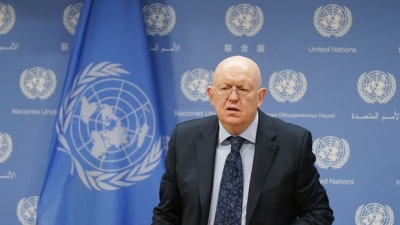
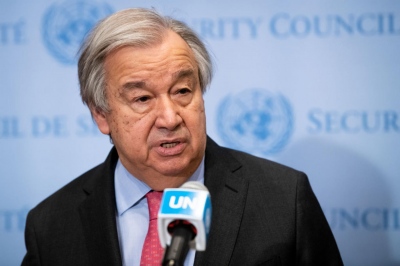
The draft also provides that, if a final agreement is reached within 60 days, it could be transformed into a binding resolution of the UN Security Council. Such a development would provide international legal force to the agreement and would transform it from a political understanding into a binding security framework. The reference to an unofficial Memorandum of Understanding shows that the two sides may be considering a gradual de-escalation of the tension in the Persian Gulf, without, however, an official agreement existing yet. The Strait of Hormuz remains one of the most important maritime routes on the planet, as a large part of the energy flows to international markets passes through there. At the same time, the exclusion of military vessels from the restoration of navigation implies that the military dimension of the crisis remains open. The proposal, if confirmed and proceeds, could constitute a first step toward a broader diplomatic settlement between Tehran and Washington.
www.bankingnews.gr





Σχόλια αναγνωστών